AI in Action: Insights from the 6th China International Consumer Products Expo
On April 13, the 6th China International Consumer Products Expo opened in Hainan, themed “Open to Lead Global Consumption, Innovation to Drive a Better Life.” This premier event in the Asia-Pacific region is not only a significant showcase for the start of the 14th Five-Year Plan but also marks Hainan’s first exhibition after the establishment of its free trade port. Over 3,400 global brands from more than 60 countries gathered to present new consumption trends focused on intelligence, sustainability, and health.
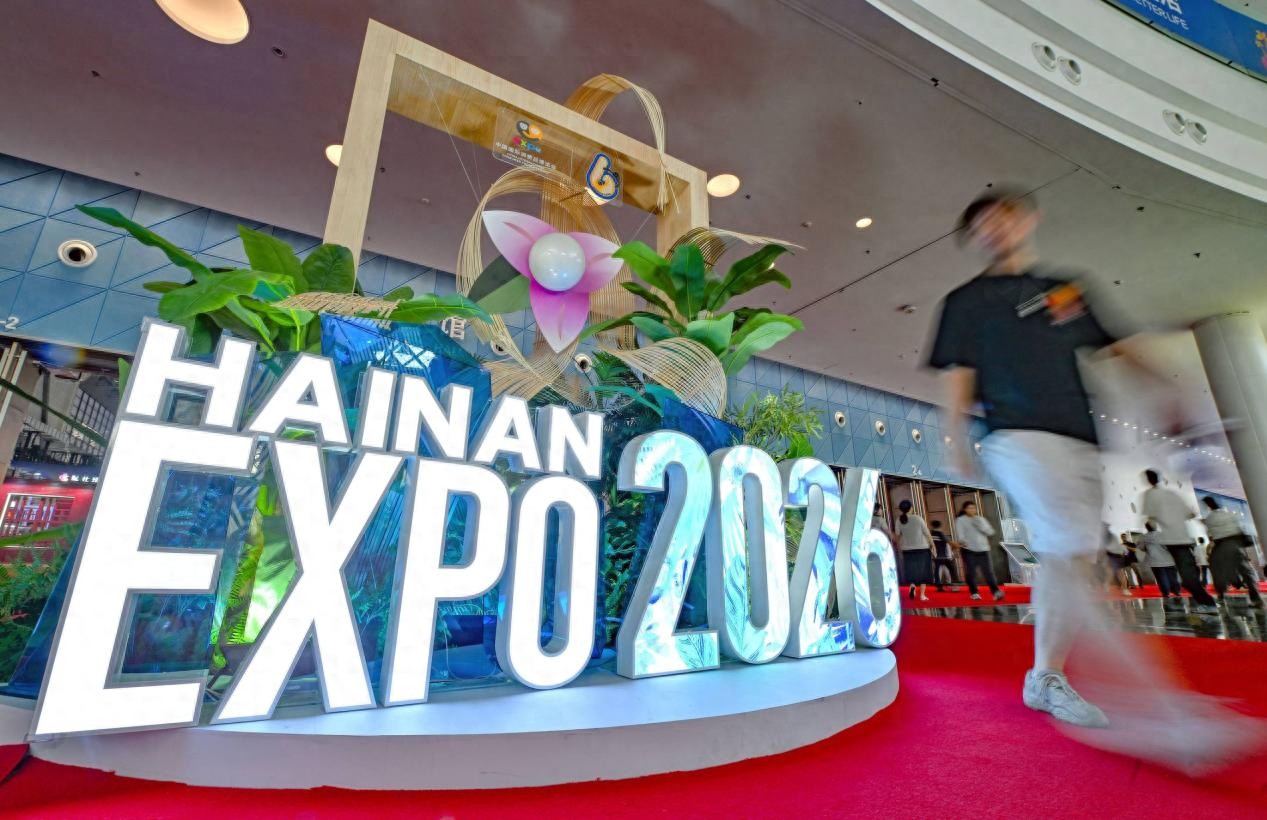
While discussions about breakthroughs in AI large models continue, the tech consumption exhibition area in Hall 1 provided clear answers: AI is not just a concept in cloud code; it is a tangible product that can be worn, placed in homes, and serve daily needs. From AI glasses to health and wellness robots, and from smart design to intelligent tourism, “Artificial Intelligence +” is integrating into real-life scenarios with unprecedented depth and breadth.
Wearable AI: From “Mobile Phones on Hands” to “Assistants in Front of Eyes”
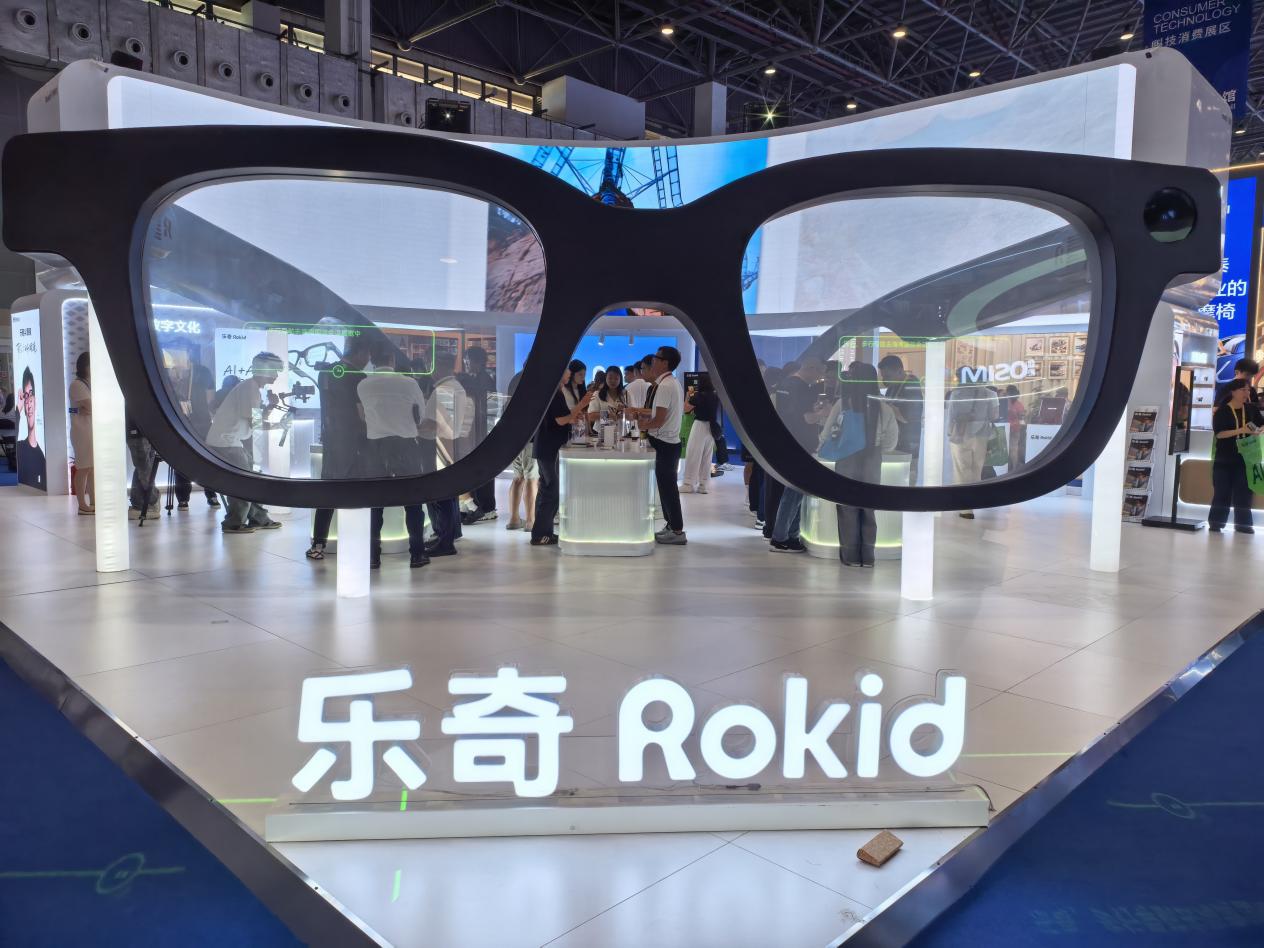
In Hall 1, AI glasses stood out as a highlight. Various models have moved from concept to mass production, with lightweight and all-day wearability being common goals. The Leqi AI glasses weigh only 49 grams and look like ordinary glasses, yet they support real-time translation in 89 languages, navigation, and AI Q&A functions. The teleprompter feature, which displays scripts on the lenses and scrolls automatically with the speaker’s pace, significantly enhances video shooting efficiency. Leqi’s staff mentioned that the latest upgrade includes a live streaming feature, allowing users to share their surroundings in real-time hands-free.
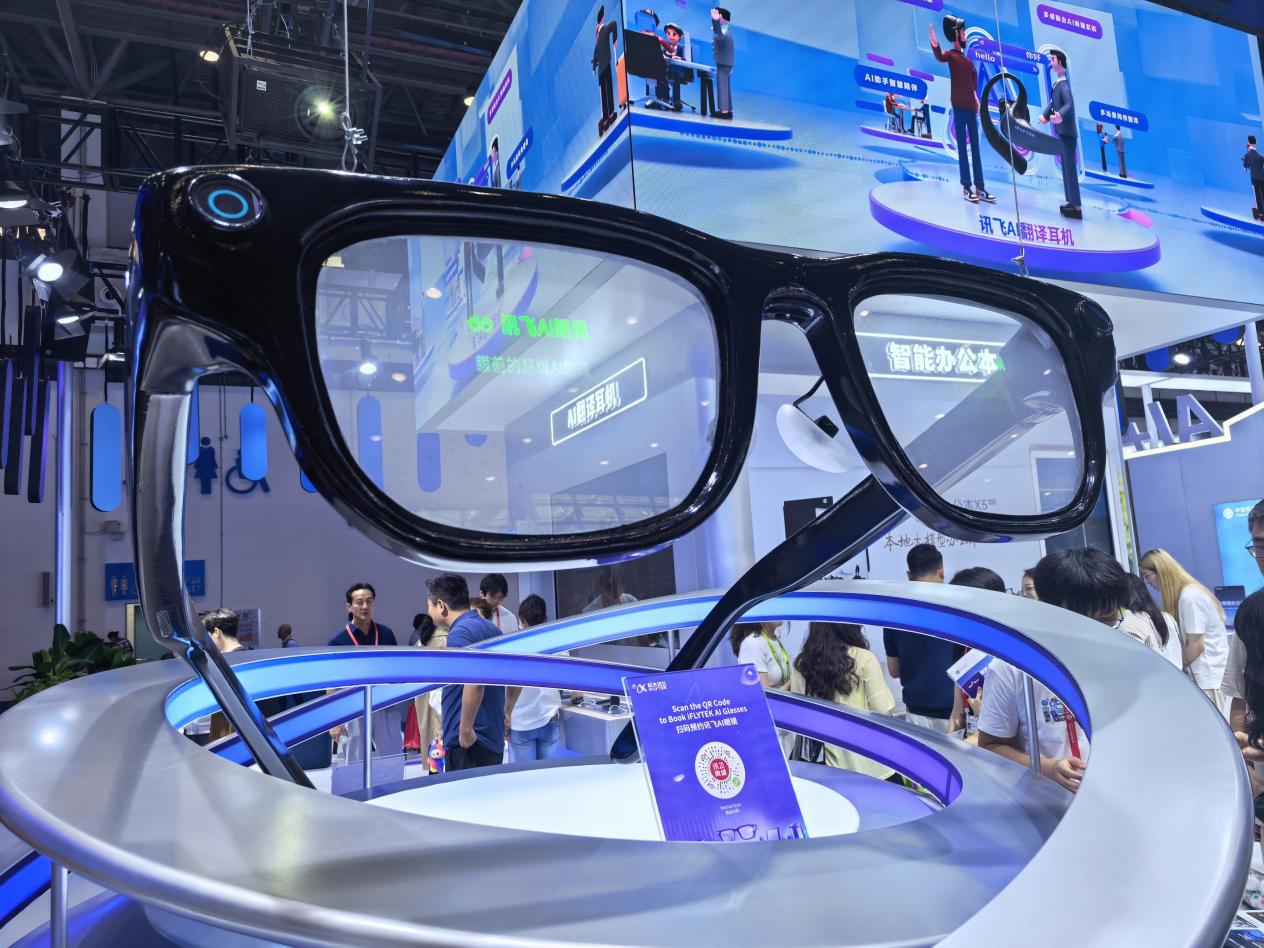
iFlytek also showcased AI glasses powered by the Spark cognitive model, integrating real-time voice-to-text, multilingual translation, and more. These glasses are designed around high-frequency daily needs, allowing users to perform tasks like navigation and translation with a simple touch on the frame, transforming AI from a “mobile assistant” in pockets to a “first screen” that is always accessible.
Leqi’s co-founder Xiang Wenjie stated, “In the future, AI glasses will become the core of human-computer interaction, with smartphones gradually retreating to the background to handle computation and storage. AI glasses will not be mere tools for specific tasks but will evolve into new organs for perceiving and extending our world. Long-term, AI glasses and AR glasses will merge, providing a lightweight experience while meeting comprehensive work, entertainment, and daily needs.”
If AI glasses address the interaction between humans and information, AI robots tackle more fundamental issues in daily life. Qunkong Technology launched the first AI robot designer, “Xiao Ku,” providing real-time intelligent design solutions for home renovations.
According to Tang Xifeng, Vice President of Qunkong Technology (Kujiale), this robot is not just a display device but a comprehensive AI space design solution that enhances the intelligence of robots. Kujiale, as the largest 3D design platform in China, has served 47,000 clients, with 478 million 3D models and over 500 million structured 3D space scenarios. Its core capability comes from the self-developed multimodal spatial model “SpatialLM,” which can generate structured 3D solutions with accurate physical properties.
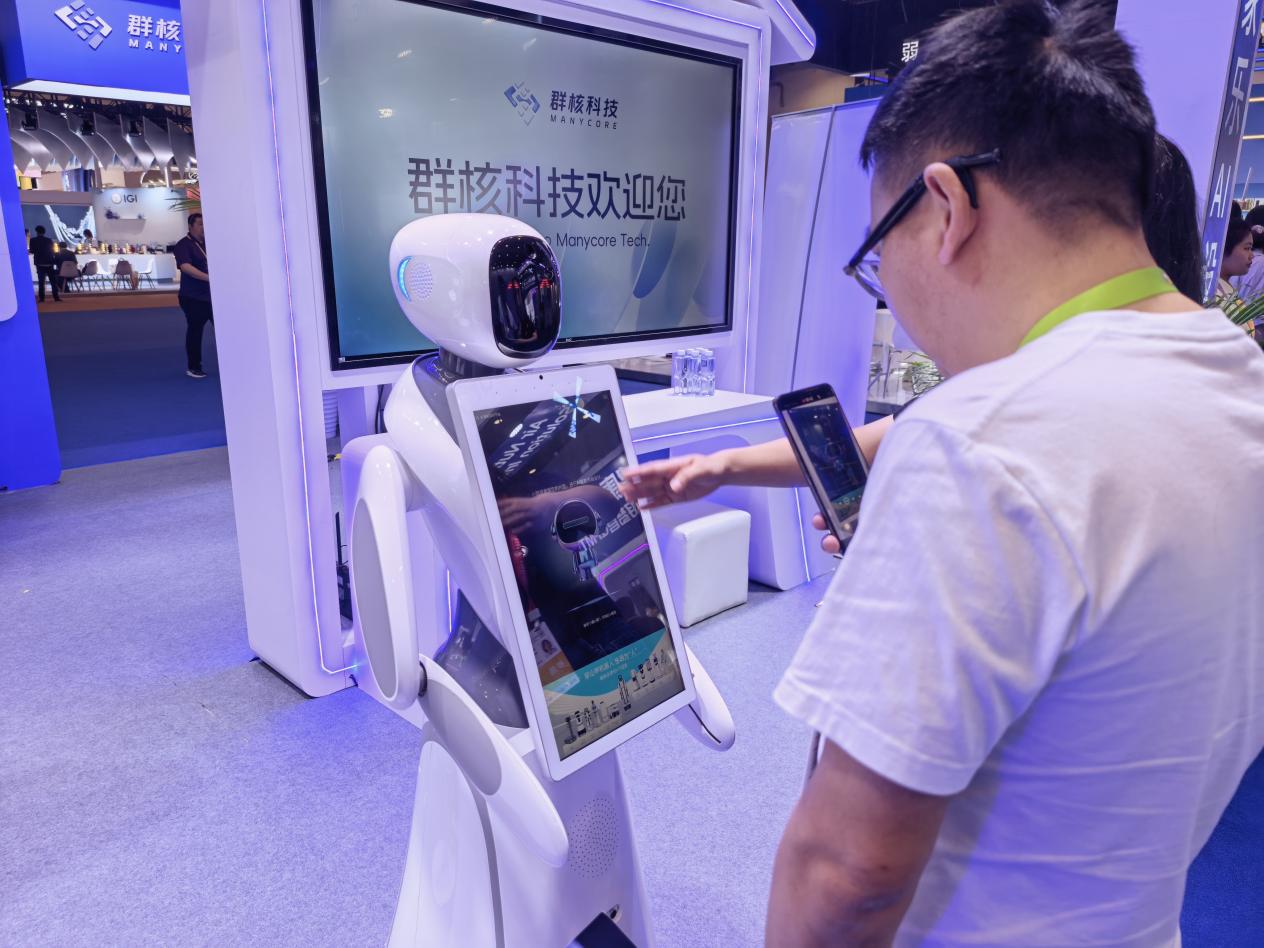
In practice, users only need to provide the robot with their community name, apartment size, and preferred style, and the robot can generate a 3D home decoration plan in minutes by pulling user data and 3D models from the cloud. If users are unsatisfied, they can request a style change via voice, and the plan refreshes instantly. This process is not intended to replace human designers but to serve as an efficiency tool that reduces initial communication costs and cognitive biases, allowing designers to focus on deepening plans and professional design work.
Extending AI Life: When Intelligent Agents Understand Your Travel
Beyond home settings, the expo revealed a more imaginative direction for AI applications in tourism. The scent of tea wafted through the exhibition hall as visitors enjoyed a live tea frying performance by an intangible cultural heritage inheritor. This was the clever idea of “Pao Pao Love Travel,” an AI service provider in the tourism sector. Founder Wang Yang stated, “West Lake is famous for its scenery, and Longjing tea carries the essence of West Lake. If a tourist visits West Lake and is a tea culture enthusiast, they will receive personalized recommendations for a hand-fried tea experience in Longjing Village rather than a generic tour.”
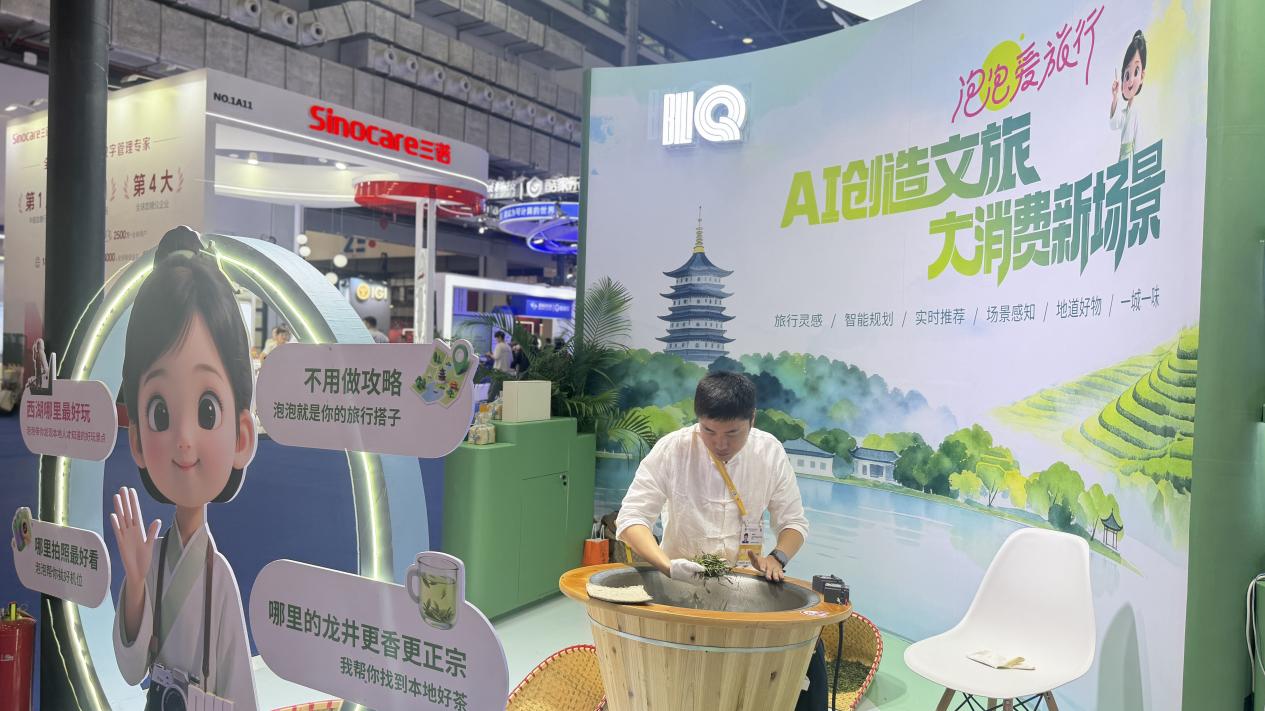
Wang believes that despite years of digitalization in the tourism industry, a core issue remains unresolved: how to convert the massive “flow” of tourists into precise “retention” that stimulates genuine consumption intent. “Traditional tourism is one-size-fits-all, making it difficult for scenic spots to match tourists’ real needs. AI’s capability lies in transforming flow into data and subsequently pushing personalized services based on that data,” Wang explained.
He summarized it as “four increments”: incremental technology, which is the recommendation-based intelligent agent; incremental scenarios, providing dynamic services tailored to different times, locations, and demographics; incremental supply, discovering unique products and services that were previously unavailable in scenic areas; and incremental business models, where payment is based on results. This project has been operational in West Lake for nearly a year, gaining experience, and agreements have been reached with several scenic spots, including Qingdao’s Shinan District, Chongqing’s Ciqikou, and Wuxi’s Liangxi District. “2026 will see rapid development.”
When asked if AI would replace tour guides, Wang provided a more human-centered answer. He believes that while AI can efficiently and cost-effectively handle standardized knowledge explanations, high-quality service still requires the warmth of a human touch. Therefore, they are building a special team of “locals” by hiring university students who serve as full-time employees and representatives of their hometown culture. The company provides them with training in AI tools, drone filming, and new media operations, with their core mission being to “speak the truth.” These locals and their AI “digital avatars” form a service loop, where the digital avatar expands service coverage and efficiency while the human ensures the authenticity of information and reliability of services. Wang hopes this approach will enhance tourist experiences and create a new employment platform for young people to “build their hometowns.”
AI for Health: When Technology Begins to Understand Health Needs
As society ages, intelligent health and wellness solutions have become another significant focus of “Artificial Intelligence +” at this expo.
Unlike AI products in consumer electronics, health and wellness AI products emphasize human warmth and multimodal interaction. High-end massage chair brand OSIM launched the global debut of the AI 5-Sense Wellness Chair, which combines with Binah.AI to create an immersive wellness experience engaging all five senses—sight, sound, smell, taste, and touch.
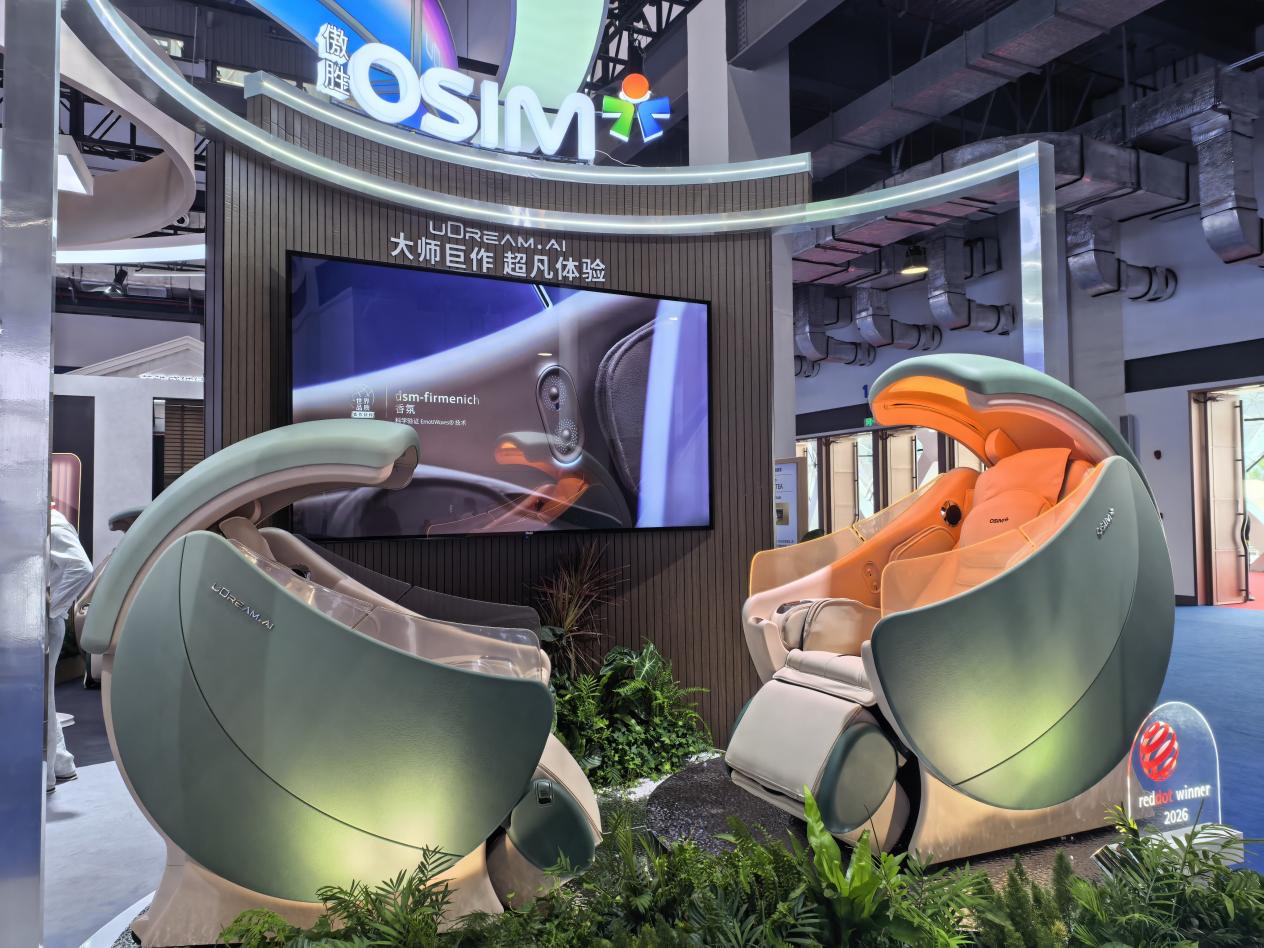
Wen Jian, Deputy General Manager of OSIM (China) South China-Shenzhen, explained, “Users only need to use facial recognition and scanning for the system to measure pressure data, heart rate, blood oxygen, and other health indicators. We shift from passive management to proactive understanding of consumers’ health status, customizing seamless experience journeys to address issues like physical fatigue, mental stress, and sleep disorders.”
This means that the massage chair is no longer just a “massage tool” but a health terminal capable of perceiving user states. When asked about the difference from ordinary AI massage chairs, Wen stated that many products only analyze conditions mechanically, lacking deep customization and continuous tracking capabilities. “Our AI solution is integrated, from monitoring to tracking and then to solutions, enabling customers to quickly grasp their health status and understand their family members’ health conditions. It addresses not only external fatigue but also internal emotional issues and sleep disorders, going deeper than most products on the market,” Wen said.
The debuting Fubao Intelligent also launched the fifth-generation “Xiao Bao” intelligent health companion robot. According to Dang Weina, Vice President of Fubao Intelligent’s Government and Enterprise Division, this robot is not just a voice assistant but an active health intelligent agent equipped with AI large models. In health monitoring, “Xiao Bao” can integrate devices for measuring temperature, blood oxygen, blood sugar, uric acid, heart rate, and blood pressure, with data uploaded in real-time and analyzed by AI to generate personal health reports, supporting 24-hour online consultations with internet doctors.
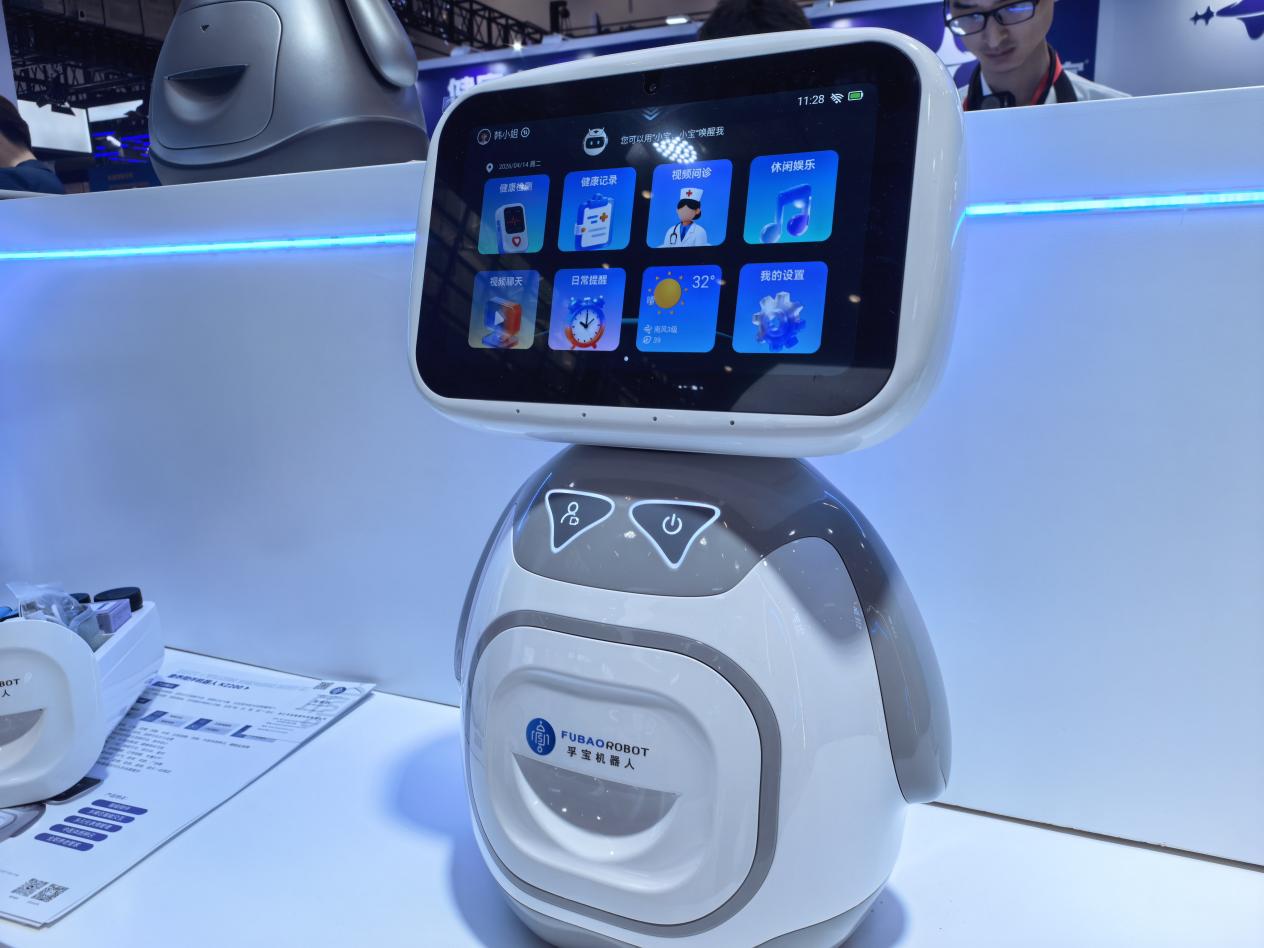
Dang stated that the company focuses on the medical and health robot sector, with products already scaled in domestic households, elderly care institutions, and overseas markets. Fubao is currently advancing CE certification in Europe and local server deployment, planning to leverage Hainan’s visa-free policy and trade facilitation to establish Haikou as a global launch point.
From a product logic perspective, these health and wellness products are transitioning from being mere “monitoring devices” to “active services.” AI biosensors capture users’ physical state data, large models analyze and provide personalized suggestions, and the precise execution by massage chairs creates intelligent agents with “perception-understanding-action” capabilities. For essential scenarios like home care and chronic disease management, this capability is shifting AI from being merely “usable” to “user-friendly.”
Bridging the “Last Mile” of AI
From smart wearables to home service robots, from intelligent health solutions to smart home ecosystems, the value of AI technology is shifting from showcasing technical parameters to enhancing quality of life. The expo’s selection principle of “priority to debut, innovation, and scenarios” sends a clear signal: the focus of competition in the consumer electronics industry is shifting from “who can create the most powerful AI” to “who can create AI that understands life better.”
From the exhibits at this expo, AI is becoming a necessity in daily life, and the “last mile” of transforming AI from technology to practical products is being accelerated. The next question may be: when AI truly becomes a standard part of daily life, what will the next narrative of consumption upgrade be?
Comments
Discussion is powered by Giscus (GitHub Discussions). Add
repo,repoID,category, andcategoryIDunder[params.comments.giscus]inhugo.tomlusing the values from the Giscus setup tool.