Developer Demographics: Highly Educated, Young, Lifelong Learners
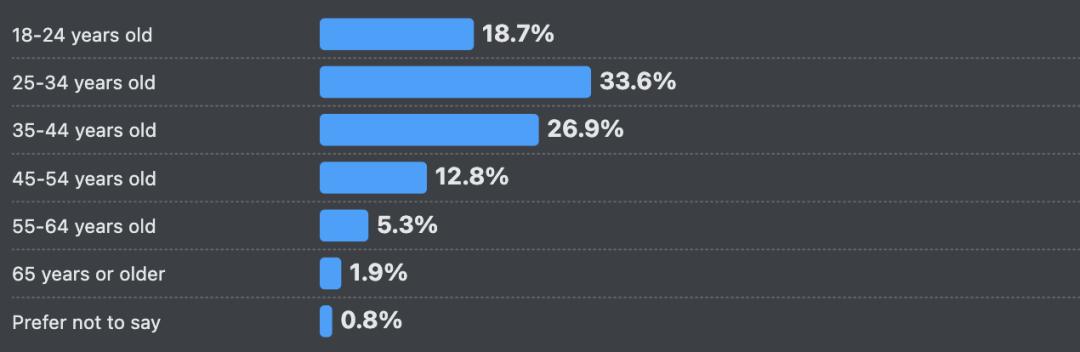
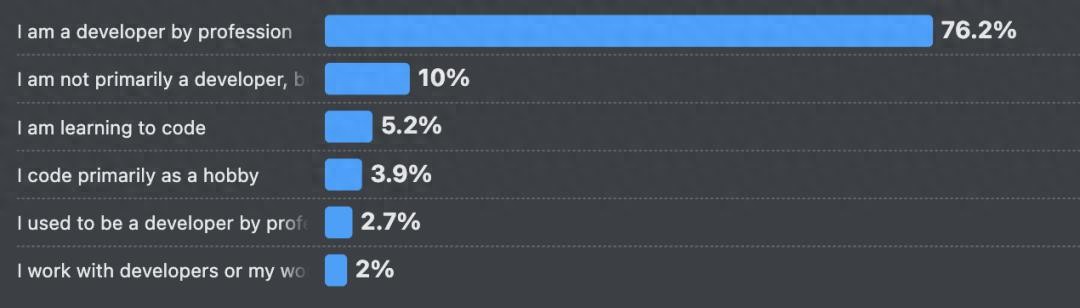 76.2% of respondents are professional developers, with the majority aged between 25 and 44, making up over 60% of the group.
 A notable trend is the increasing education level among learners; 30% of those currently learning programming hold a Bachelor of Science degree, up from 24% last year.
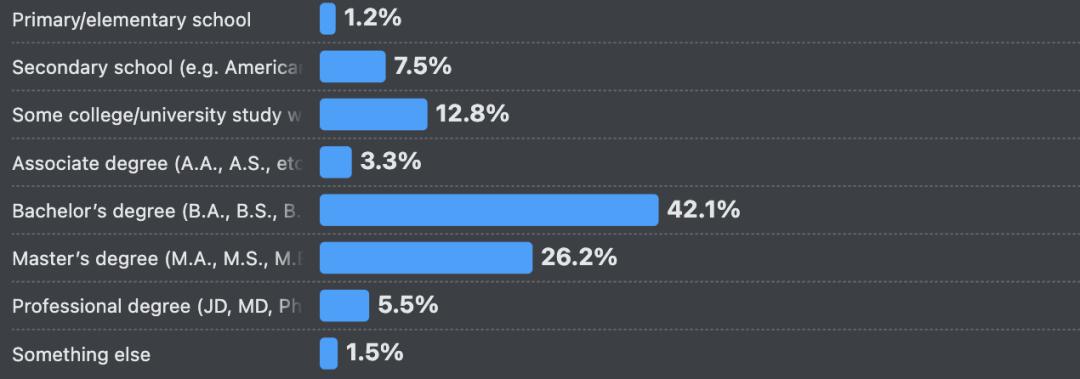 This rise indicates that programming is no longer just a gateway into the industry but a key method for upskilling in the workforce. 69% of developers reported dedicating time to learn new coding techniques or languages in the past year.
Despite the abundance of multimedia tutorials, technical documentation remains the preferred learning resource, with nearly 68% of respondents using it in the past year. This reflects a preference for authoritative and rigorous materials over quick content.
AI itself has also become a focal point for learning, with over 36% of developers specifically studying how to use AI-powered tools. AI-driven tools and applications are the most common way to understand artificial intelligence, with a usage rate of 52%.
Major Changes in the Tech Stack: Python Rises, Docker Becomes Essential
Python has emerged as the biggest winner in programming languages this year, with a 7% increase in usage, reaching 57.9%.
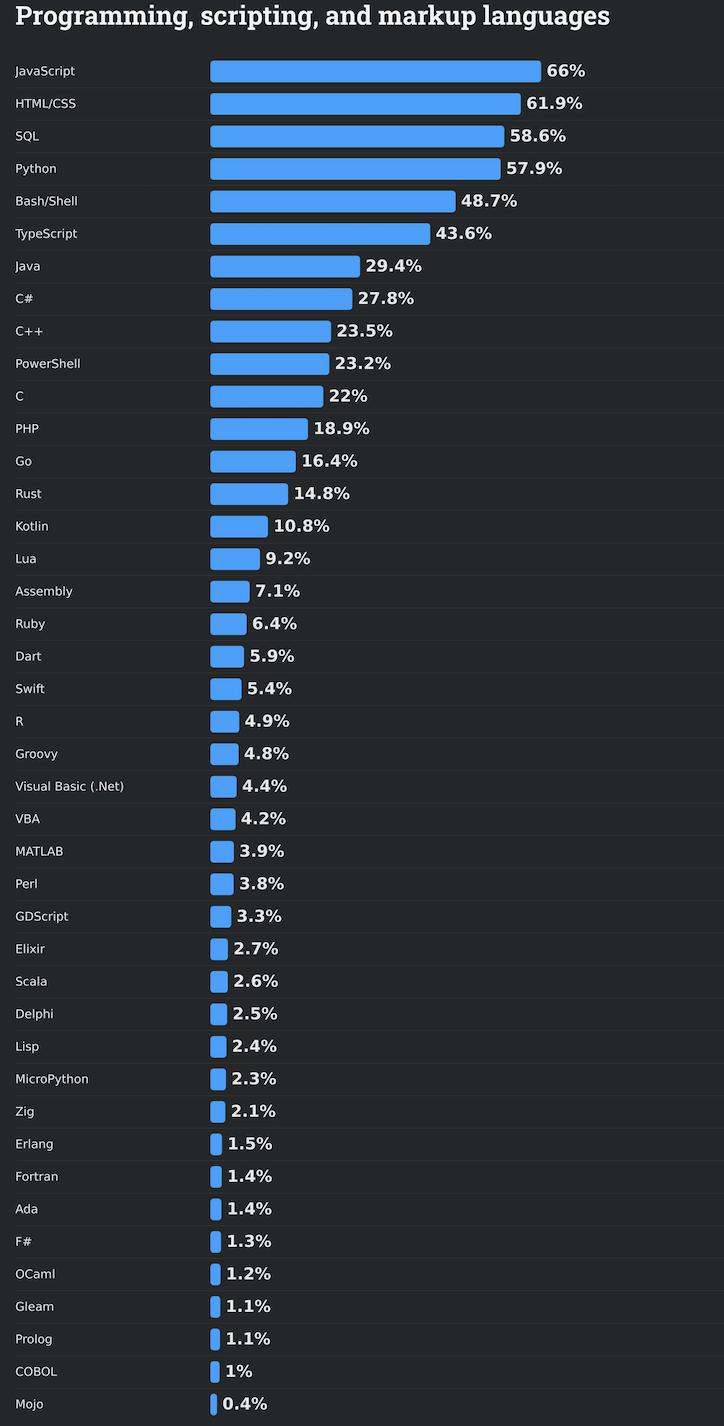 This growth is driven by the deep integration of AI, data science, and backend development. Python has evolved from a scripting language to a universal language connecting algorithms and engineering, serving as a ticket to the intelligent era.
Docker’s dominance in infrastructure has also solidified, with a remarkable 17% increase in usage, reaching 71.1%, marking the largest single-year growth among all technologies surveyed.
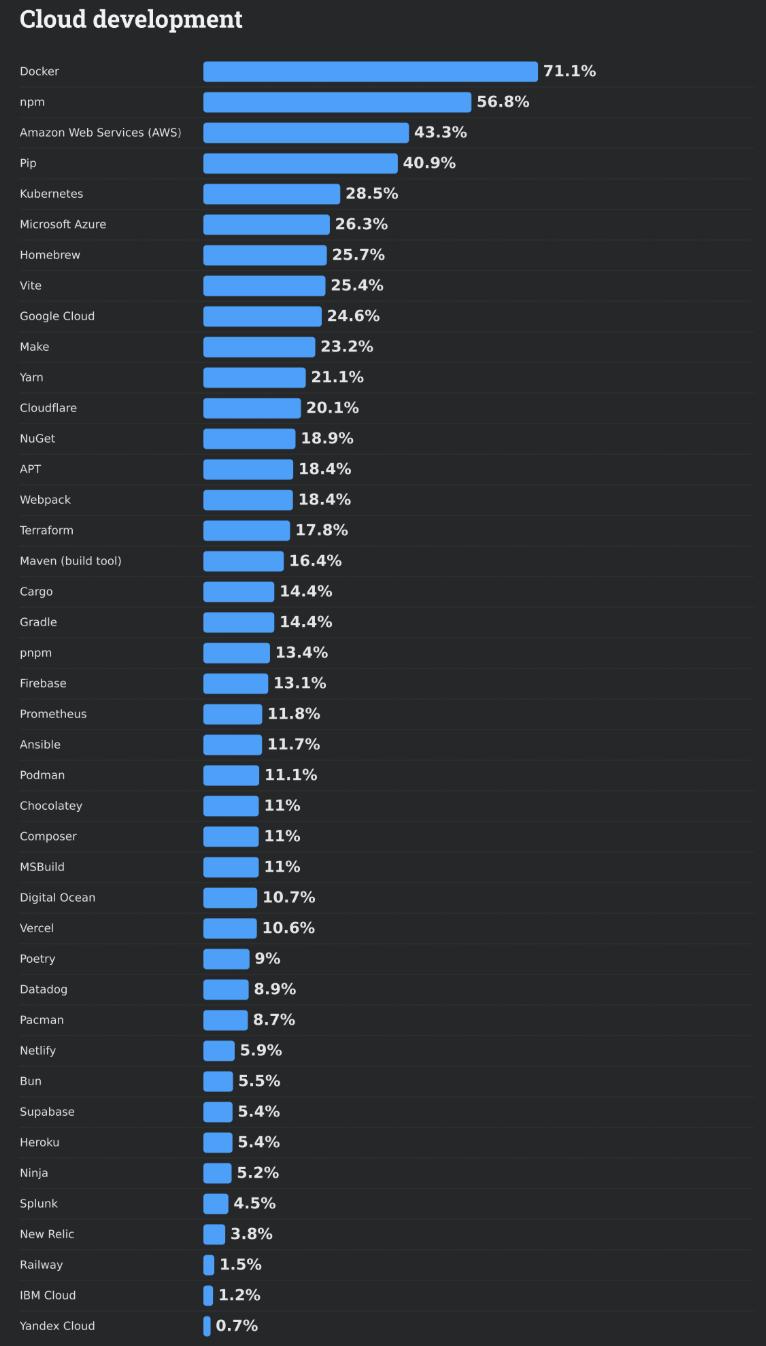 This indicates that containerization technology has transitioned from a popular tool to an industry standard, becoming as essential as utilities in modern software delivery.
Redis usage has grown by 8%, highlighting its importance as a high-speed in-memory caching and data structure storage solution amid increasing demand for high concurrency and low latency.
FastAPI has seen a 5% increase, indicating a strong trend towards building high-performance APIs with Python, further confirming the overall prosperity of the Python ecosystem.
In the IDE competition, despite the emergence of various AI-native editors, Visual Studio and Visual Studio Code continue to dominate, maintaining their positions as the best solutions for developers’ diverse needs.
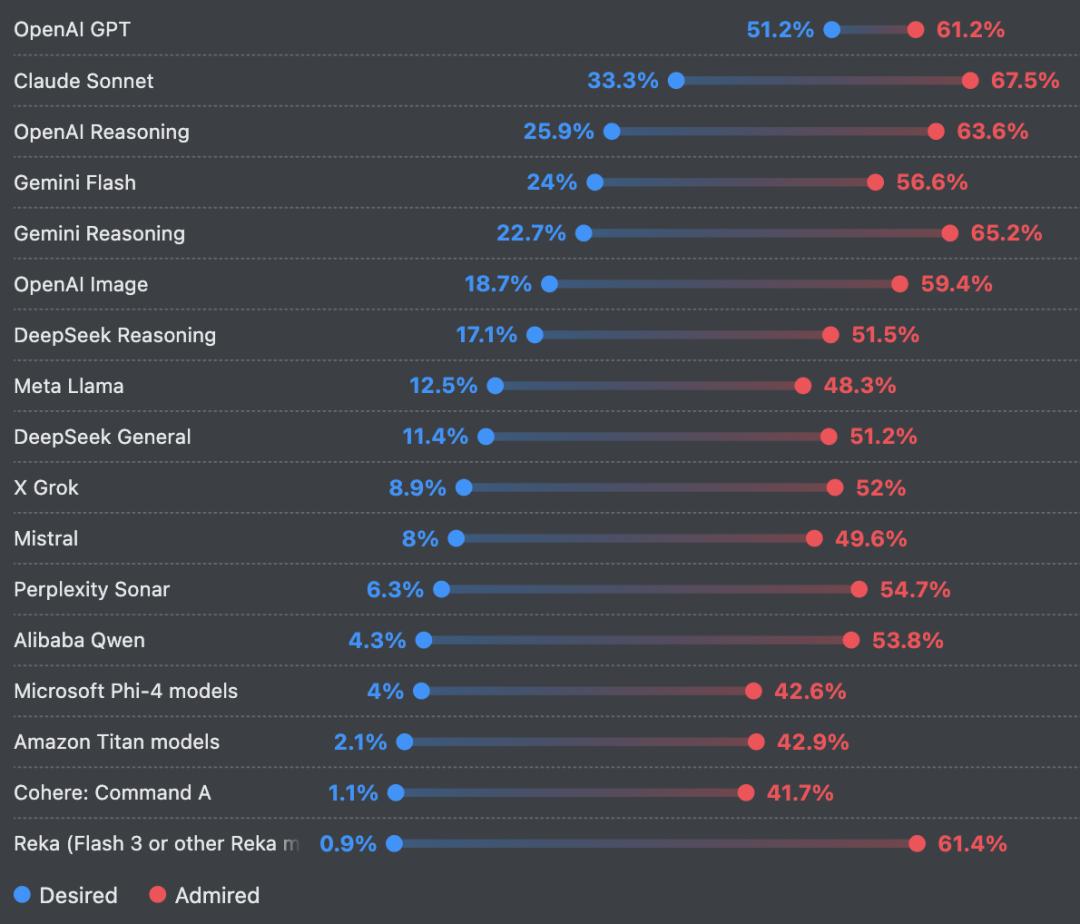 Among AI programming models, Anthropic’s Claude Sonnet is the most favored large language model this year, ranking second among those developers wish to try (33%).
The Other Side of AI Adoption: 84% Use It, but Trust Issues Arise
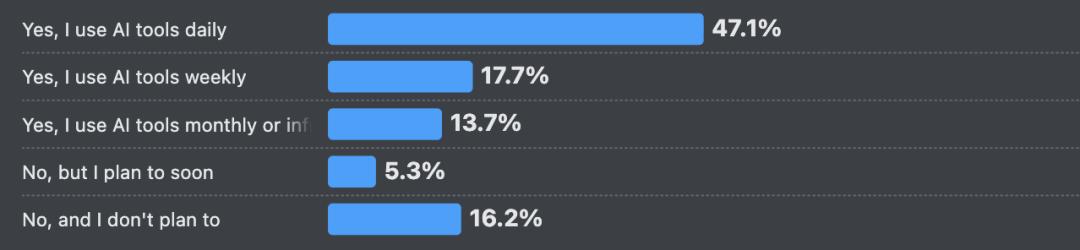
The survey reveals that 84% of respondents are using or planning to use AI tools, an increase from last year, with 51% of professional developers integrating them into their daily workflows.
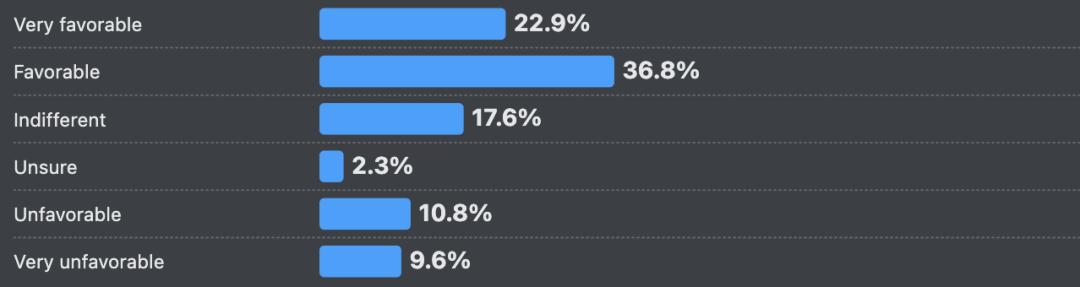
 However, behind this high adoption rate, a trust crisis is emerging. Developer sentiment towards AI tools has dropped from over 70% in the previous two years to 60% this year.
 Why has satisfaction decreased despite increased usage? The core issue lies in the cognitive load caused by AI-generated solutions that are often “almost correct but not entirely.” 66% of developers reported that their biggest frustration stems from handling these nearly accurate AI solutions, which can be harder to detect than obvious bugs.
Additionally, 45% of developers believe that debugging AI-generated code takes more time than writing it themselves, revealing an overlooked cost: while AI lowers the barrier to code generation, it raises the costs of code review and debugging.
The trust data is alarming, with more developers explicitly stating they “do not trust” AI accuracy than those who do, and only 3.1% expressing “high trust.”
 This caution is particularly evident among experienced developers, with 20% expressing “high distrust.” In critical tasks like deployment and monitoring, developers show strong resistance to using AI.
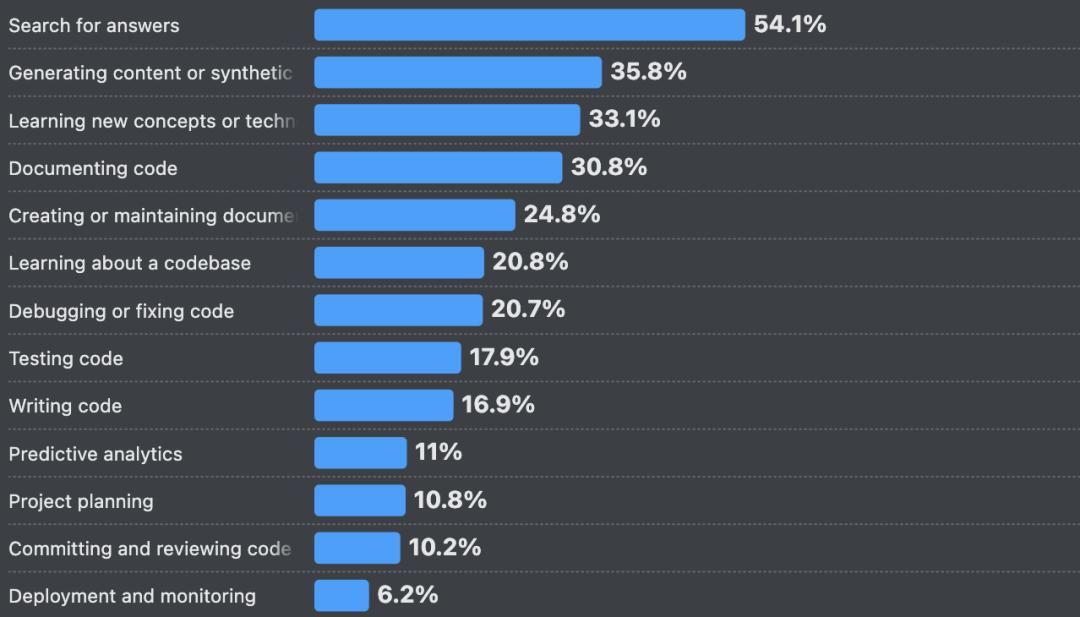 76% do not plan to use AI in deployment monitoring, and 69% refuse to use it in project planning, indicating that in key areas involving system stability and architectural decisions, human developers prefer to rely on their judgment and experience.
The AI Agent Myth: Great Concept, Poor Implementation
AI agents, which are software entities capable of autonomous decision-making and task execution, are touted as the next wave of generative AI. However, the data from Stack Overflow suggests that AI agents have not yet become mainstream.
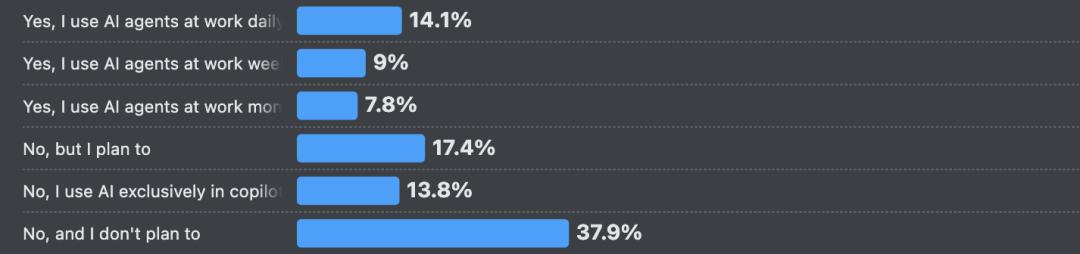 52% of developers reported that they either do not use agents at all or only engage with simple AI tools, while nearly 38% have no plans to adopt them.
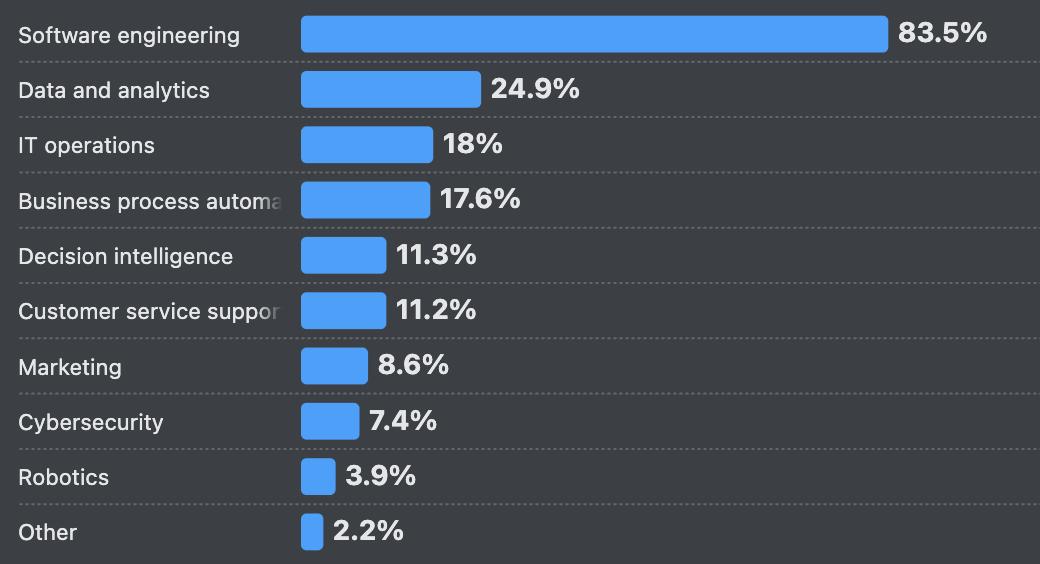
If you happen to be using AI agents in your work as a software developer, you are likely applying them to software development (about 84% of respondents).
 The main barriers to the adoption of agents remain accuracy and safety concerns.
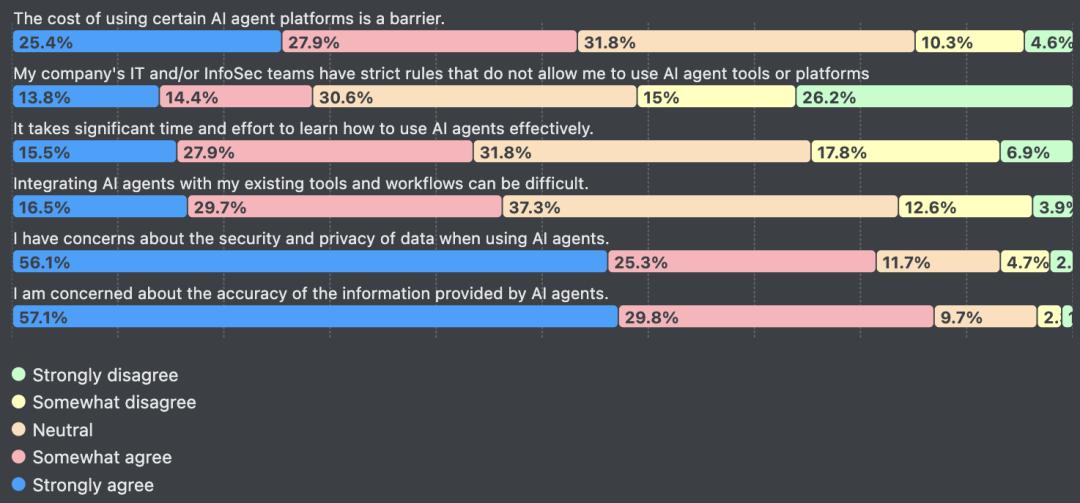 87% of respondents expressed worries about the accuracy of agents, and 81% are concerned about data security and privacy issues. Handing over business logic to an uncontrollable “black box” poses significant compliance and risk management challenges.
However, early adopters are exploring this space. Currently, open-source tools dominate the agent orchestration field, with Ollama (51.1%) and LangChain (32.9%) being the most widely used frameworks.
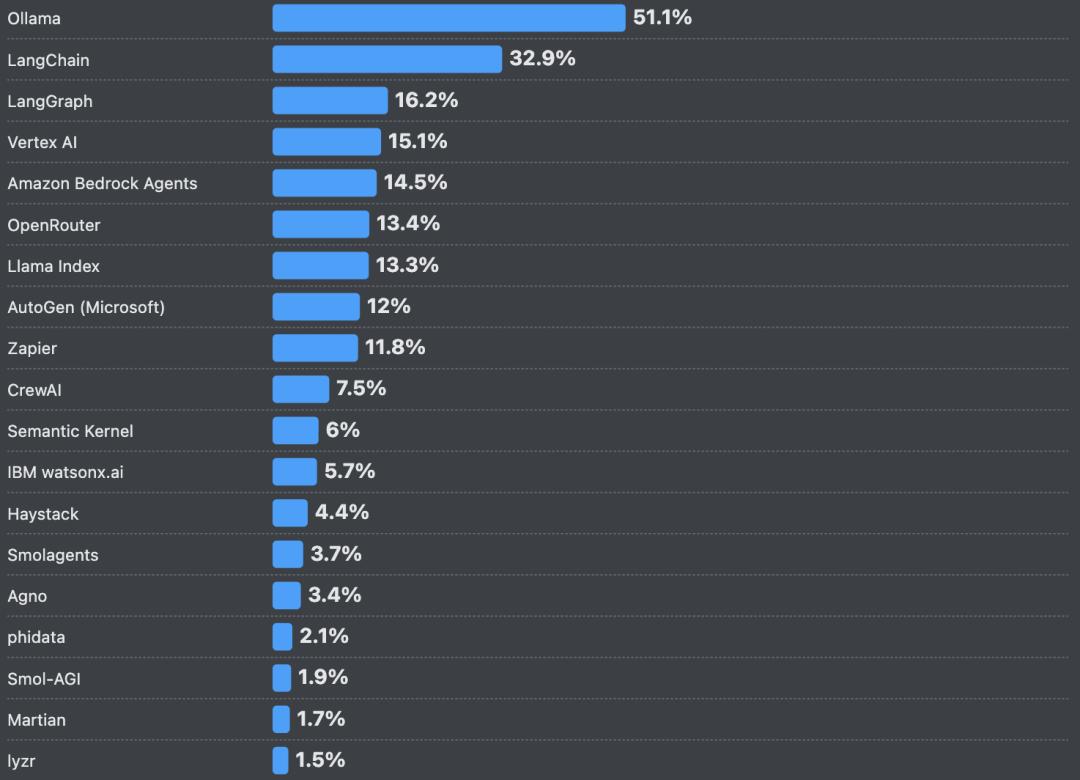 In data storage, Redis (43%) demonstrates its flexibility, widely used for memory management in agents. Meanwhile, vector-native databases like ChromaDB (20%) and pgvector (18%) are starting to gain traction.
In the observability domain, developers tend to reuse existing DevOps toolchains.
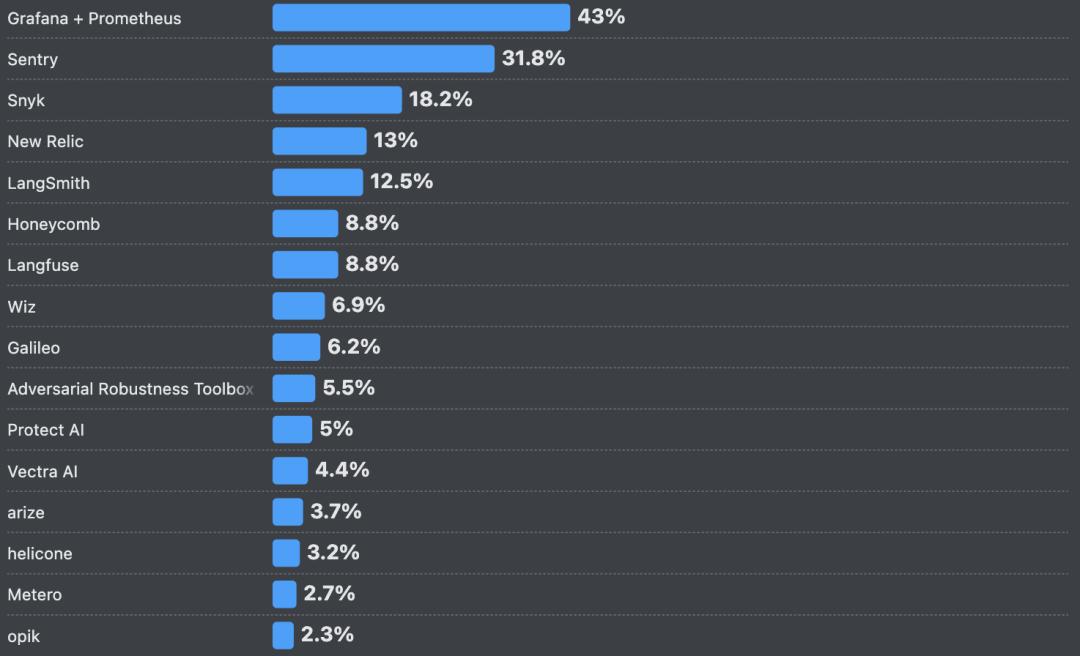 The combination of Grafana and Prometheus is adopted by 43% of agent developers, indicating that traditional monitoring logic remains effective in monitoring AI behavior.
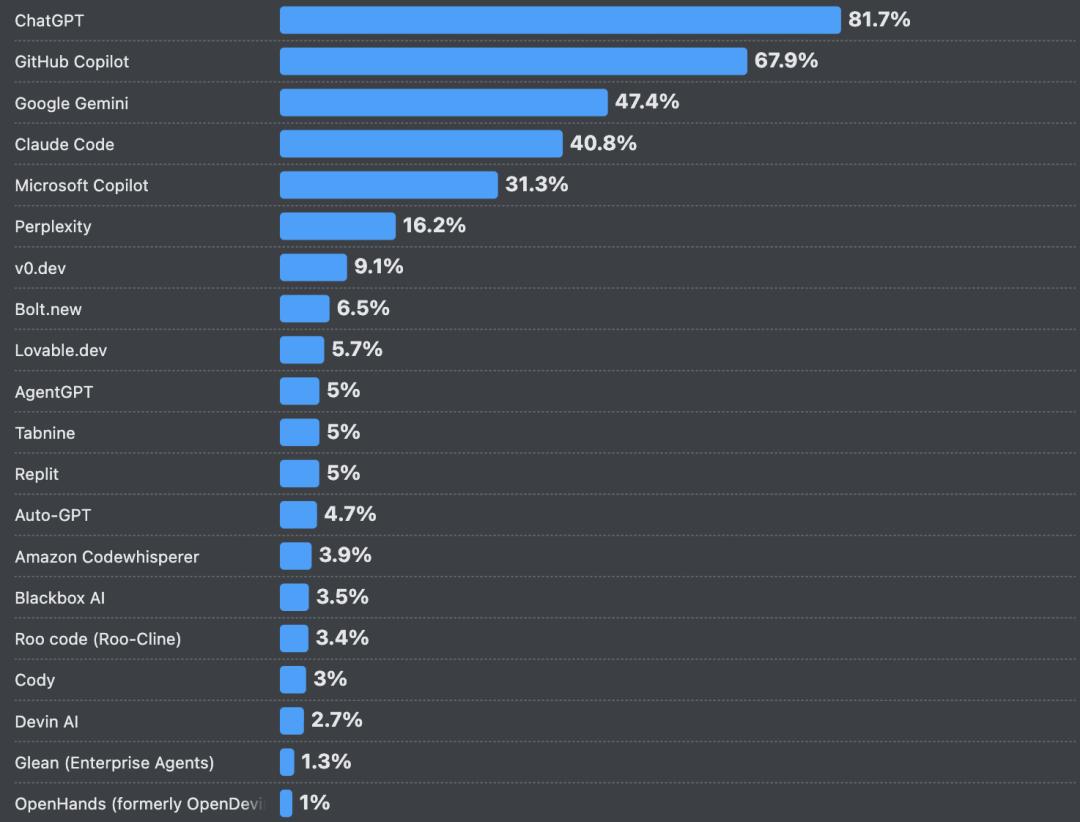 As for “out-of-the-box” AI-assisted tools, ChatGPT (81.7%) and GitHub Copilot (67.9%) remain the preferred entry points for most developers due to their first-mover advantage and powerful model capabilities.
Rejecting “Vibe Coding”: Humans as the Final Gatekeepers
The report concludes by addressing a more fundamental issue: the human-machine relationship. Recently, the term “vibe coding” has gained popularity, referring to generating software through prompts without rigorous understanding.
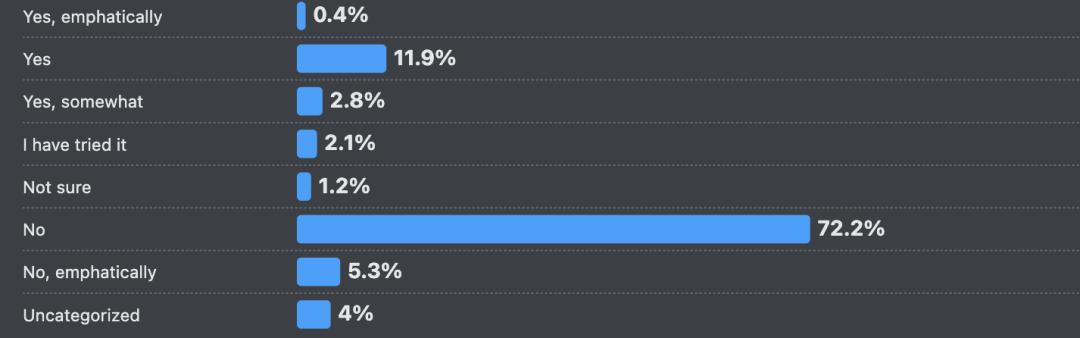 However, the survey shows that the vast majority of developers (72.2%) do not engage in this non-rigorous development mode, with another 5% emphasizing that it does not belong to professional work.
This indicates that engineering rigor remains the bottom line for professional developers. The 2025 Developer Survey provides a clearer understanding of the AI technology revolution. Fear and blind worship are becoming things of the past, with rational pragmatism gradually becoming mainstream. In the rapidly evolving AI era, staying alert and continuously learning may be the wisest survival strategy.
Comments
Discussion is powered by Giscus (GitHub Discussions). Add
repo,repoID,category, andcategoryIDunder[params.comments.giscus]inhugo.tomlusing the values from the Giscus setup tool.